News Headlines

« »
Showing posts with label Bussiness. Show all posts

FOREX-Swiss franc jumps; govt will 'live with' strength


* Swiss franc climbs, government accepts strength
* Dollar slides against yen, BofJ intervention eyed
* Markets eye upcoming U.S. payrolls data (Updates prices, adds details)
NEW YORK, Aug 31 (Reuters) - The Swiss franc jumped against the euro and the dollar on Wednesday after a top Swiss government official said the nation would have to live with a strong currency and the Swiss National Bank (SNB) stayed away from intervention.

The SNB has been conspicuously absent from the currency forwards market since last week. It did not take any new measures after making an announcement on three of the last four Wednesdays in August.
Switzerland's economy minister detailed plans to offset the currency's impact on the economy but not to directly counter its strength. For details, see [ID:nL5E7JV2LZ]
"We'll have to keep living with the strong franc for some time. It must be a combination of measures that will lead us into the future," said Economy Minister Johann Schneider-Ammann.
The scaling back of currency intervention speculation pushed the euro down 2.6 percent to 1.15341 francs on electronic trading platform EBS EURCHF=EBS, while the dollar slumped 2.2 percent to 0.8026 francs on EBS. CHF=EBS
"The franc is massively overvalued," Schneider-Ammann said.
It was the biggest daily loss in the dollar against the Swiss franc since Aug. 9, when the dollar fell to a record low of 0.70676 Swiss francs. The euro also saw its biggest one-day decline since Aug. 9, when it fell to a record low of 1.0075 Swiss francs.
The SNB's intervention in the swaps market and moves to flood the Swiss banking system with francs and cut interest rates to near zero had brought the Swiss franc back from peaks.
The low-yielding Swiss franc may recoup more losses from earlier this month as the government lets markets decide its fate, with policymakers expecting the currency to remain strong, according to David Song, analyst at DailyFX in New York.
"The rebound in the franc may gather pace in the days ahead, and the Swissie may continue to outperform its major counterparts as market participants diversify away from the U.S. dollar," Song said.
Analysts said the the Swiss franc looked oversold on daily charts, having hit its lowest level since early July on Monday.
Mounting concerns about European sovereign debt and hopes of new U.S. Federal Reserve stimulus drove investors back into the safety of the Swiss franc, according to Omer Esiner, chief market analyst at Commonwealth Foreign Exchange in Washington.
"While the threat of SNB intervention may slow the franc's rise, it is unlikely to meaningfully deter investors from the safe harbor offered by the franc."
For the month, the dollar has climbed 1.3 percent against the Swiss franc, the first monthly gain since January 2011. The euro has climbed 1.934 percent against the Swiss franc, the first monthly gain since March.
Traders also awaited Friday's key U.S. Labor Department report on August unemployment and payrolls amid renewed expectations the Fed would act again to boost the economy.
The dollar was down 0.3 percent at 76.534 yen. JPY=EBS
With the yen hovering near a record high of 75.941 against the dollar earlier in August on trading platform EBS, traders remained wary of the potential for Japanese authorities to intervene to sell the yen.
The dollar slumped for the third straight month against the yen.
Against the dollar, the euro was last down 0.5 percent at $1.4375 on EBS EUR=EBS. Traders said month-end demand for dollars from investors rebalancing stock and bonds portfolio weighed on the euro.
The euro gained 0.3 percent against the dollar in August, the first monthly gain since June. 

Oil rises above $114


01 September 2011
LONDON — Oil prices rose slightly yesterday as traders tracked buoyant global equity markets, upbeat economic data and sliding gasoline reserves in top crude-consuming nation the United States.
By 1:25 pm EDT, Brent crude was up 89 cents at $114.91 a barrel, after touching a four-week high of $115.19, on track to post its seventh consecutive day of gains.
Spot gold was down 0.7 per cent at $1,824.50 an ounce as rising equity markets weakened safe-haven bids. But it was sharply off early session lows as the US economic data raised hopes the Federal Reserve would use additional stimulus to boost economy.
In currency trading, the dollar fell against the yen, touching 76.84 yen and marking a new bottom since August 19. For the month, the dollar was flat against a basket of currencies.
Wall Street rallied more than one per cent. European stock markets bounced higher, with Frankfurt, London and Paris also soaring. — AFP

Keep ATMs full of cash on Eid, banks told


KARACHI: The State Bank of Pakistan (SBP) has directed commercial banks to ensure that ATM’s are not empty during Eid holidays, Geo News reported.

According to sources, SBP has directed all commercial banks to ensure that ATM’s are operational to provide service to customers. Sources add that ATM’s can stock up to Rs 2 million at a time with certain ATM’s capable of stocking Rs 3 million.

Further SBP has issued new currency notes worth Rs 108 billion for Eid which is Rs13 billion more than last year. 

Forex reserves ease to $17.96b


Karachi—Foreign exchange reserves fell to $17.96 billion in the week ending Aug. 20, from $18.04 billion the previous week, due to scheduled debt repayments, a senior central bank official said on Thursday. Reserves held by the State Bank of Pakistan (SBP) fell to $14.50 billion from $14.55 billion a week ago, while those held by commercial banks eased to $3.46 billion from $3.49 billion, said SBP chief spokesman Syed Wasimuddin.

Foreign exchange reserves hit a record $18.31 billion in the week ending July 30. The reserves were boosted in June by inflows of $411 million, including a loan of $191.9 million from the World Bank, and another loan of $196.8 million from the Asian Development Bank.

Higher export proceeds and a record inflow of remittances have helped Pakistan’s forex reserves grow steadily. According to official data, remittances rose 38.57 percent to $1.1 billion in the first month of 2011/12 fiscal year, compared with $791.18 million in the same period last year.

KARACHI: Traders’ daily losses soar to Rs2 bn


 Traders’ daily losses soar to Rs2 bn KARACHI: The city is facing a complete shutdown as traders, transporters and fuel station owners decided to keep their regular operations closed after the MQM announced ‘day of mourning’ Tuesday, Geo News reported.

The traders blamed the police and security administration for failing to protect their businesses in such a situation.

Chairman Traders Action Committee, Siddique Memon told Geo News that currently the traders are facing losses up to Rs2 billion while the sales have dropped to 70 % owing to the city situation.

According to sources of industrial sector, colossal loss of Rs10 billion is expected in the production sector due to deteriorating situation of the city.

Economic experts said that the labourers working on daily wages are the worst affected due to business paralysis in such situation while unemployment is also rising on a larger scale.

Therefore, traders’ bodies have demanded the government to deploy army as the police and Rangers have failed to protect them.

Euro remains under selling pressure in Asia


 Updated at: 1024 PST,  Friday, August 19, 2011
Euro remains under selling pressure in Asia TOKYO: The euro faced continued selling pressure in Asia on Friday as a tumbling global stock market continued to erode risk appetite and push the European single currency down, dealers said.

The euro fell to $1.4312 in Tokyo morning trade from $1.4337 in New York late Thursday.

Against the Japanese yen, the euro stood at 109.65 yen, unchanged from New York but down from 110.26 yen late Thursday in Tokyo.

Despite moves to stall its rise by the Swiss central bank, the Swiss franc strengthened to 1.1381 francs per euro, compared with 1.1464 francs late Thursday in Tokyo.

But it fell to 0.7953 against the dollar from 0.7936.

"In general, players are avoiding taking unnecessary risks," said Sumino Kamei, senior analyst at the Bank of Tokyo-Mitsubishi UFJ. "I don't see any reasons for supporting the euro above $1.45 now."

In New York, panicky stock market selling on Thursday pushed the euro down and the safe-haven Swiss franc higher, while gold hit a new record high and US bond yields plumbed all-time lows.

Markets were driven by new fears of recession in Europe and the United States after a Morgan Stanley report warned that growth in both was almost completely stalled.

Japan's Nikkei index lost 2.15 percent Friday morning after shares on Wall Street and in Europe plunged.

The dollar changed hands at 76.61 yen in Tokyo Friday against 76.52 yen in New York late Thursday amid ongoing speculation over a possible yen-selling intervention.

"In terms of intervention, Japan's stance has not changed," Kamei said.

The Japanese currency, seen as a safe-haven unit amid market turmoil, last week neared its post-World War II high of 76.25 to the dollar.

Japan intervened on forex markets in early August, selling yen and buying dollars, and has signalled that it stands ready to do so again.

Dealers also said that market participants were likely to stay on the sidelines, awaiting Federal Reserve Chairman Ben Bernanke's highly anticipated speech on August 26. (AFP)

Industrialists of Karachi demand army intervention


 Updated at: 1849 PST,  Friday, August 19, 2011
Industrialists of Karachi demand army intervention KARACHI: The traders and industrialists of Karachi have demanded army intervention to stop bloody violence in city. The demand has been made by Federation of Pakistan Chambers of Commerce & Industry, Karachi Chamber of Commerce & Industry, Korangi Association of Trade & Industry and Traders' action Committee in separate statements on Friday.

"Given the grave circumstances, where civil law enforcement agencies have failed in restoring peace in Karachi, which has now become hub of bloodshed hub, the Army must be called in, being the last resort to enforce peace in the city of 17 million," Khalid Tawab, President of Federation of Pakistan Chambers of Commerce, suggested.

Similar demand was made by KCCI president Saeed Shafique saying that the police have miserably failed to restore peace in Karachi.

Chairman of Karachi Traders Action Committee (KTAC), Siddiq Memon also demanded of Pakistan Army's chief to take immediate notice of the grave condition of Karachi.

KTAC's chairman demanded that the city should be immediately handed over to the army as all trading activities have ended and the economy has been devastated.

Memon added that the police and rangers both have failed to maintain law and order in the city while the ongoing unrest and violence in the city has caused more than Rs.100 billion worth of losses to the local traders.

"More than 300 Eid bazaars and markets are closed while more than 35,000 workers of those bazaars and markets have lost their jobs," KTAC's chairman added.

Patron-in-Chief Korangi Association of Trade and Industry, S M Muneer, Chairman, Syed Johar Ali Qandhari, former Chairman, Mian Zahid Husain and Vice Chairmen, Saleemuzzaman and Shahid Jawed Qureshi besides members of KATI showing their grave concern on prevailing law and order situation of Karachi said that it seems that law and order is getting out of control of the local administration and the law enforcing agencies and it's now inevitable to call Pak army to control the law and order situation in the city.

"For the greater interest of the country and save precious lives of the citizens, we appeal to the government to ask army to take over law enforcement of the city for the time being and return to the barracks soon after cleansing the city from illegitimate arms and weapons which seems beyond control of the Police and Rangers", Qandhari said.

He said that the ongoing strife between various groups and gang war has destroyed Karachi's peace and traders and industrialists are so frightened to go to their business. The old city area has totally disturbed while industrial production has severely affected. He warned that in such a situation government cannot run the country's affairs as Karachi being the backbone of the economy may not be able to feed the entire country anymore.

"This is worst ever economic situation in the city during last three years and due to, which entire country is suffering. People are feared of their lives and reluctant to come out of their homes. How the country's economy could be run in this extremely fragile situation", Muneer asked the government.

He further asked the apex body of the business community - FPCCI to immediately call an emergent meeting of the stakeholders and decide line of action in order to save the country's economy.

The business leaders were of the view that killing of innocent people in almost every area of Karachi is becoming a routine and it appears law enforcing agencies were not enough capable to control the situation. How can police control the situation when almost 5,000 policemen were deputed to give escort and security to around 100 VIPs in a city of over twenty million people, they questioned.

Chairman, Pakistan Tanners Association (S.Z), PTA, Aziz Ahmed also strongly appealed the government to take stringent measures to restore and maintain law and order of the city to save precious lives of the citizens. He said in a statement that exports shipments are badly affected due to worsening law and order situation due to which industrial activities have crippled severely. He mentioned that labour force is not coming to work due to massive target killing in almost every corner of the city.

He said that all the foreign buyers have also cancelled their visit to Pakistan due to the reason and exporters are extremely worried over cancelling of orders. He asked the government to take every necessary action to restore law and order instead of sitting idle.

Oil higher in Asian trade


 Updated at: 0758 PST,  Monday, August 15, 2011
Oil higher in Asian trade SINGAPORE: Oil prices were higher in Asian trade Monday, lifted by buoyancy in regional stock markets but analysts said the spectre of another global recession was expected to limit gains.
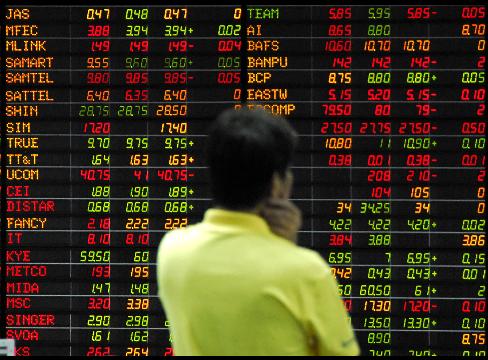
New York's main contract, West Texas Intermediate crude for delivery in September, was up 22 cents to $85.60 a barrel in morning trade. Brent North Sea crude for September advanced 27 cents to $108.30.

"Asian stocks are gaining and so oil futures are rising in parallel to that," said Victor Shum, an analyst with Purvin and Gertz energy consultancy in Singapore. "But I expect that the market will continue to be rocky and volatile because there's still concern about a potential return of the global economy to a recession," he told.

"Traders will be wary and the wariness will limit any upside in the short term for crude."

World Bank chief Robert Zoellick said in Australia on Sunday that investors had lost confidence in the economic leadership of several key countries and warned that global markets were in a "new danger zone" as a result.(AFP)

Black market: LPG prices register a 25% hike in one month


Being sold at Rs150 per kg vs Rs120 in July.
 
ISLAMABAD:  The price of liquefied petroleum gas (LPG) in rural areas of the federal capital has hit a new peak. LPG is being sold at Rs150 per kilogram, even though it was available in the market for Rs120 per kilogram last month.
Most people are compelled to buy LPG at inflated rates because there is no natural gas in their areas.
The residents claim that the Oil and Gas Regulatory Authority (OGRA) has fixed the rate of LPG at Rs105 per kilogram. However, local sellers are not adhering to the rate fixed by OGRA.
According to the residents, the price of LPG increased ten times during Ramazan last year.
In July, LPG was being sold at Rs120 per kilogram. The residents also said that the government is keeping no check on profiteers, adding that the production and marketing companies of LPG were taking undue advantage of the situation. They claimed that the producers were influential people, who had no regard for the poor people.
Apart from that, the residents said certain people were illegally transferring gas from one cylinder to another — a dangerous practice that can cause an explosion leading to a loss of life.
They demanded that the government should either lower the price of LPG or provide gas in the rural areas.
During the last eight years, the number of LPG producers has increased from five to nine, whereas the number of marketing companies has increased from 27 to more than 76.
The residents also said the producers had earned billions of rupees in illegal profits between 2004 and 2008. Even today, the producers continue to make high profits at the cost of local people.
They have demanded the government to conduct an inquiry against LPG producers, marketing companies, and distributors and take stern action profiteers.

Asian stocks slump on fresh global economy fears


 HONG KONG: Asian markets slumped on Wednesday as traders turned their attention after the US debt deal to the weakening global economic outlook and fears of fresh sovereign debt contagion in the eurozone.

Despite President Barack Obama signing off on the deal to raise the US debt ceiling and avoid a devastating default, equities suffered a heavy sell-off and investors put their cash in safe haven gold, which surged to a record high.

Tokyo dived 2.21 percent by the break, Hong Kong fell two percent and Sydney tumbled 2.10 percent while Seoul was 2.64 percent off. Shanghai was flat.

The red ink in Asia followed similar losses on Wall Street, where markets fell for an eighth straight day, the longest losing streak since the beginning of the financial crisis in October 2008.

The Dow sank 2.19 percent, the S&P 500 dropped 2.56 percent and the tech-heavy Nasdaq shed 2.75 percent. The Nasdaq and S&P 500 both closed below where they started the year, while the Dow is at its lowest since mid-March.

Investors were unmoved by news that Moody's Investors Service affirmed the US's Aaa rating after the 11th-hour deal to avert a default by Washington. As US default fears lifted, attention turned to the economic outlook. And traders were spooked, with a report showing US consumer spending declined in June, the first drop in nearly two years, suggesting the economy is stalling. That followed results showing manufacturing virtually stalled in the US as well as across Europe and Asia. However, bond markets were roiled by troubles in the eurozone.

In overnight trade, concern was focused on Italy and Spain with spreads between yields on their sovereign bonds and those of Germany hitting record levels, dampening hopes that the eurozone debt crisis might soon be over.

The premium demanded for buying Spanish 10-year bonds over safe-bet German bonds surged to more than four percentage points -- 404 basis points -- the highest since the introduction of the euro in 1999.

Investors sold down Spanish and Italian bonds on concerns that their debt problems would only get worse as economic growth slows.

On currency markets, the euro softened against the greenback in Asian trade, easing to $1.4183 in Tokyo from $1.4202 in New York late Tuesday. The euro fetched 109.57 yen against 109.51 yen. The dollar was rangebound at 77.25 yen compared to 77.14 yen.

Risk aversion sent the price of gold to a record high $1,662.00-$1,663.00 overnight as investors looked for safer vehicles amid times of uncertainty.

The precious metal opened slightly lower in Hong Kong at $1,653.00-$1,654.00 an ounce, up from Tuesday's Hong Kong close of $1,627.50-$1,628.50. However, worries of a drop in demand hit oil. New York's main contract, light sweet crude for September delivery eased 49 cents to $93.30 a barrel and Brent North Sea crude for September delivery sank 65 cents to $115.81. (AFP)

KSE timings during Ramazan

 KARACHI: The trading of stocks at Karachi Stock Exchange (KSE) will continue from 9:15 a.m. to 2 p.m. under KATS from Monday till Thursday during the month of Ramazan.
However, on Friday the trading will be held from 9 a.m. to 1 p.m.
According to KSE announcement here Wednesday, the pre-opening time will be from 9 a.m. to 9:15 a.m.
The KSE office timing will be from 9:30 a.m. to 3:30 p.m. between Monday and Thursday and from 8:45 a.m. to 3:30 p.m. on Friday.
Square up market will be held between 11 to 11:30 a.m. while negotiated deal market (NDM) timings will be from 9 a.m. to 3:30 p.m. on Monday to Thursday and from 9:30 to 3 p.m. on Friday.

Pakistan has great expectations for Chinese PM’s visit


A policeman walks past portraits of Pakistani Prime Minister Yousuf Raza Gilani, Chinese Premier Wen Jiabao and Pakistani President Asif Ali Zardari (left to right) displayed along an Islamabad road ahead of Wen's three-day visit to Pakistan. Wen’s visit focuses on energy, military and economic ties with Pakistan. [REUTERS/Faisal Mahmoo
ISLAMABAD – Chinese Premier Wen Jiabao arrived in Islamabad December 17 for a three-day visit to discuss expanding economic and trade relations with Pakistan.

Analysts are confident that the two countries will further enhance trade and bilateral relations. They are expecting China to announce investments in Pakistan worth $25 billion in a number of sectors.

“Pakistan enjoys excellent relations with China both at the government-to-government and people-to-people level. The relationship is broad based with its strategic, military, political and economic dimensions,” said Lt. Gen. (ret.) Talat Masood.

Wen received a warm welcome at Chaklala Air Base, Rawalpindi, by Prime Minister Yousuf Raza Gilani and the full cabinet, including a 21-gun salute.

“Pakistan-China relations are unprecedented, and the whole Pakistani nation is quite aware of it,” Gilani said after greeting Wen.

“Hopefully, we will be signing various treaties this evening,” Gilani added.

China has invested over US $1.3 billion in Pakistan in recent years, and analysts say the two countries plan to expand annual bilateral trade to US $15 billion by 2012.
Observers are expecting the countries to sign 13 Memoranda of Understanding (MoUs) in different sectors, including trade, culture, communication and energy.

Another 23 MoUs await signature December 18, according to sources. A one-on-one meeting of the two prime ministers will focus on regional peace and security, as well as on pursuit of new investment opportunities.

It is also expected that China will provide US $200m for the rehabilitation of flood-affected areas, as well as a large amount for development of Pakistani agriculture. Sources also said China is expected to announce a large loan for upgrading the railway system.
Accompanying Wen are 250 Chinese business leaders who will attend a summit with Pakistani counterparts to exchange views and firm up proposals for various joint ventures.

China has invested over US $1.3 billion in Pakistan in recent years, and analysts say the two countries plan to expand annual bilateral trade to US $15 billion by 2012.

“Chinese Premier Wen Jiabao’s 3-day official visit to Pakistan reflects the Chinese government’s special attention to the development of China-Pakistan relations,” said Chinese Ambassador to Pakistan Liu Jian.

China is a major supplier of weapon systems to Pakistan and has contributed significantly to developing the country’s defence industries by providing technology.

Pakistani stock market value surges by US $4 billion


Brokers at the Karachi Stock Exchange monitor prices of shares as the KSE-100 index gained 178 points on January 13 and closed at 12,459 points, the highest benchmark since April 2008. [Jave
KARACHI -- The market capitalization of the Pakistani stock market has grown by about $4 billion since November thanks to several positive developments, analysts said.

In less than four months, the market capitalization of the Karachi Stock Exchange (KSE) has surged from US $34 billion in October, to US $38 billion as of January 12, said Ahmed Nabil, chief investment adviser of the Pak-Oman Asset Management Company.

“Foreign investors’ continued interest in making investment in Pakistani stock market, release of $633m worth coalition support fund by the United States, IMF’s decision to extend deadline of levying the Reformed General Sales Tax (RGST) and impressive growth in remittances supported growth (of the) market and encouraged new investment,” Nabil said.

The market has recorded $70m in foreign investment since November that encouraged local investment at the bourse, improved its market capitalization and value of blue chip instruments, he said.

In Pakistan local investors usually follow foreign investment in the stock market, Nabil added.

The government has deferred the enforcement of the RGST after opposition parties came out strongly against it. But the tax will be enforced in July to increase the tax-to-GDP ratio, government revenues and to promote better documentation of sales and purchases, he said.

About 9% of Pakistan's GDP comes from tax revenues, well below the international standard of 15%. The IMF had sought to have Pakistan impose the RGST as of January 1, but has agreed to its postponement to July. Both the tax ratio and RGST are conditions for loans to Pakistan.

Tax changes needed to control budget deficit

Nabil said the government should collect taxes from the country’s rich, otherwise, it would be difficult for the rulers to control the fast-growing budget deficit and to raise the tax-to-GDP ratio to the required level.

“Foreign investors’ continued interest in making investment in Pakistani stock market, release of $633m worth coalition support fund by the United States, IMF’s decision to extend deadline of levying the Reformed General Sales Tax (RGST) and impressive growth in remittances supported growth (of the) market and encouraged new investment,” Nabil said.
A majority of parliament and the country’s rich oppose the government’s plan to increase taxes because they fear it will deteriorate the government’s fiscal discipline as the government has already borrowed some $4.75 billion from the State Bank of Pakistan and the commercial banks to meet its expenditures from July 2010 to January 1, Nabil added.

“The stock market is still attractive for investment as the shares of more than 450 companies are available at very reasonable rates,” Naeem Rafi, CEO of the Rafi Securities told Central Asia Online.

The majority of foreign and local investment has gone to oil and gas companies, while shares of other firms are still available at an attractive price, he said. Presently, some 600 companies trade shares on the KSE.

Rafi said medium- and long-term investment could ensure a good return to investors as the country’s economy seems poised to grow in 2011.

Rafi said the country received $5.3 billion dollars in remittances from Pakistanis working overseas during the second half of 2010, an increase of $761m over the corresponding period for 2009.

All of these positive developments have raised the foreign exchange reserves of the country to a current record high of $17.3 billion, which has improved investor confidence and paved the way for the stock market's steady growth, Rafi said.

He said the government should reduce its budgetary expenditures to control the deficit, impose taxes on the rich, eliminate subsidies and reduce dependency on foreign and domestic loans to strengthen the national economy.

Otherwise, he warned, the current improvement in the capital market, foreign exchange reserves, exports and remittances could prove momentary and once again key segments of the economy could end up in reverse gear.

Growth in value was year-long effort

The growth in valuation has been going on throughout the past year, points out Lahore Stock Exchange managing director Aftab Ahmed Chaudhry. He said the KSE-100 index of leading companies showed impressive growth in 2010.
“In January 2010 the benchmark index took off from 9,387 points … and it amounted to 12,020 points by gaining 1,633 points amid gradual improvement in trading and investment,” Chaudhry said.

The KSE hit a record 16,000 points in April 2008, but later dropped after the imposition of emergency rule by then President Pervez Musharraf, as well as the Lal Mosque operation that triggered a series of suicide blasts, followed by global and domestic economic downturns, he said.

From January 2009 the market gradually moved towards growth and this pattern continued in 2010, Chaudhry said. He predicts the index could reach 15,000 in 2011.

To sustain the momentum of market growth, the government should introduce new investment products, a margin trading system and provide incentives to investors and other stakeholders, he said.

Textile city to create 80 thousand jobs: Dr Hafeez


Textile city to create 80 thousand jobs: Dr Hafeez KARACHI: Finance Minister Dr Abdul Hafeez Sheikh on Saturday said that textile city in Karachi would create 80 thousands jobs, Geo News reported.
Talking to media after the meeting, Finance Minister said that Karachi Electric Supply Company (KESC) assured to provide 250 MW power, Sui Southern 9 MMCFD gas while Water Board would supply 2000 MGD water after which launching of industries would begin.

Meanwhile, Sui Souther Gas Company (SSGC) sources said that company would be able to supply 9 MMCFD gas from the next year’s summer season only if they received more gas.

Sources said that electricity, gas and water supply to existing industrial areas were not satisfactory, adding that the supply to textile city would be challenging.

How to Avoid 7 Common On-the-Job Mistakes


Everyone makes mistakes--but some of those mistakes are more avoidable than others. When it comes to your job, even just one mistake could result in major consequences for your career.
Impress your employer by avoiding the following mistakes:
Mistake #1: Being unavailable
It's inevitable that, at some point, your supervisor or co-workers will approach you and ask for your help on an outside project or assignment. Although it might be tempting ignore those emails or say no to additional work, don't. You might think that no one will notice if you don't help with extra work, but they will. And, although it's not technically in your job description, more companies today must do more with less--meaning each employee needs to be flexible and multi-skilled. Make yourself indispensible by pitching in on other assignments when possible. (Of course, don't overextend yourself to the point where you can't get your normal work done.)

Mistake #2: Failing to dress to impress
Some of the best job advice I've heard is to to always dress at least one step above your current position. It helps others picture you working above your current position and makes you look extremely professional. You're not just an intern/entry-level professional, you have the potential to be so much more--so act like it.
Mistake #3: Trying to complete every task to perfection
No one is perfect. And while doing projects to the best of your ability is something you should strive to do, it doesn't mean you'll never make a mistake or do something incorrectly. If you make a mistake, own up to it and correct it. Remember to not lose sight of the overall goal by focusing too much on the little details. You could potentially miss deadlines and quality of your work--not to mention drive your co-workers (and boss) crazy.
Mistake #4: Waiting for feedback
Many workplaces still don't give employees feedback more than a few times per year. If you wait around for feedback for several months, you're doing yourself (and your organization) a disservice. Instead of waiting for your supervisor to come to you, ask to set up a quick meeting to discuss your progress thus far and any improvements you could make. Bring up specific projects you've completed and ask for feedback on things you were unsure about. This way, you know where you stand in your position and at the company--before a formal performance review comes across your desk.

Mistake #5: Hiding out at your desk
Even if you're doing spectacular work, you could be overlooked if you sit at your desk each day and avoid interactions with co-workers and upper management. When you need a break, head over to the break room or cafeteria and interact with other workers in your office. Not only will this help reduce stress on the job, but you'll have the potential to make some great professional relationships, too.
Mistake #6: Not asking questions
Some people think asking questions is a sign of weakness. But when you're unsure how to complete a task, it can be hard to do it the right way the first time without clarification. When assigned a new project, ask any questions that might come up right then and there. You might also want to inquire about how your success will be measured and how often you should update your boss on the progress. Your supervisor would much rather that you ask questions now in order to avoid potential problems later.

Mistake #7: Ignoring the corporate culture
When you first start on a new job, it's important to take note of cultural differences from previous workplaces. What does everyone wear on a daily basis? How much socialization goes on during the workday? Do employees tend to come in early or stay late? What is the typical mode of communication for the office? Assimilating to the culture is a great way to fit in quickly at the organization and get along with other employees.

Microsoft puts Office in the cloud, confronts Google


SEATTLE (Reuters) - Microsoft Corp is making its biggest move into the mobile, Internet-accessible world of cloud computing this week, as it takes the wraps off a revamped online version of its hugely profitable Office software suite.
The world's largest software company is heaving its two-decade old set of applications -- including Outlook email, Excel spreadsheets and SharePoint collaboration tools -- into an online format so that customers can use them on a variety of devices from wherever they can get an Internet connection.
It wants to push back against Google Inc, which has stolen a small but worrying percentage of its corporate customers with cheaper, web-only alternatives, which remove the need for companies to spend time on installing software or managing servers.
"It's obvious that Microsoft has to do this if they're going to remain competitive with Google," said Michael Yoshikami, chief executive of money manager YCMNET Advisors. "It's something they have to do."
Microsoft shares rose 3.7 percent on Monday, the largest gain in a single trading day since September, partly buoyed by hopes that it can ultimately boost profits by extending its software dominance to the growing cloud sector.
"If they execute effectively and it's adopted, it could be a game changer," said Yoshikami. "Whether or not that will happen is a whole other story."
Microsoft has offered online versions of some Office programs -- chiefly Outlook email -- for its corporate customers for several years, and last year rolled out free versions for individual home users.
Chief Executive Steve Ballmer is set to present an overhauled and updated set of offerings -- collectively called Office 365 -- at an event in New York City on Tuesday morning, underlining the company's newfound online focus.
GROWING MARKET
The market for web-based software services is heating up, and every company, government department and local authority is getting pitches from Microsoft and Google whenever they reevaluate their office software.
It's a new challenge for Microsoft, which built itself up on expensive versions of software installed on individual computers. That business model turned the Office unit into Microsoft's most profitable, earning more than $3 billion alone last quarter.
Microsoft's plan is to make up for smaller profit margins from web-based applications -- due to the cost of handling data and keeping up servers -- by grabbing a larger slice of companies' overall technology spending.
Last October, when it rolled out a test version of the new service, Microsoft said it planned to charge from $2 per user per month for basic email services to $27 per user per month for advanced offerings. Google charges a flat fee of $50 per user per year for its Web-based Google Apps product, which offers email, calendars, word processing and more online.
Microsoft, like Google, will host users' data remotely, and maintain all the servers in vast data centers. Unlike Google, it will also allow companies to put their data on dedicated servers if they choose, or keep the data on their own premises.
The full launch of Office 365 will spice up the lively competition with Google for new users.
Earlier this month, Google snagged InterContinental Hotels Group as a major customer, moving 25,000 of its employees onto Google email from Outlook.
Google, which has had the most success in the small and medium-sized business range, says there are now 40 million users of online Google Apps suite. Microsoft does not publish equivalent numbers, but research firm comScore has estimated 750 million people worldwide use Office in some form.
But Internet-centric Google -- whose success is based on its dominance in web search -- is confident it has the upper hand in the cloud.
"Compared to what they (Microsoft) have in the market today, they have nowhere to go but up," said Dave Girouard, head of Google's worldwide enterprise business. "We feel we're years ahead of them in terms of building a viable cloud solution that just works."

Iraq hunting $17 billion missing after U.S. invasion

BAGHDAD (Reuters) – Iraq's parliament is chasing about $17 billion of Iraqi oil money it says was stolen after the 2003 U.S.-led invasion and has asked the United Nations for help to track it down.
The missing money was shipped to Iraq from the United States to help with reconstruction after the ouster of Saddam Hussein.
In a letter to the U.N. office in Baghdad last month, parliament's Integrity Committee asked for help to find and recover the oil money taken from the Development Fund of Iraq (DFI) in 2004 and lost in the chaos that followed the invasion.
"All indications are that the institutions of the United States of America committed financial corruption by stealing the money of the Iraqi people, which was allocated to develop Iraq, (and) that it was about $17 billion," said the letter sent to the U.N. with a 50-page report.
The committee called the disappearance of the money a "financial crime" but said U.N. Security Council resolutions prevent Iraq from making a claim against the United States.
"Our committee decided to send this issue to you ... to look into it and restore the stolen money," said the letter, a copy of which was obtained by Reuters.
U.N. officials were not immediately available for comment.
SALARIES, PENSIONS
The DFI was established in 2003 at the request of the Coalition Provisional Authority (CPA), the U.S. body headed by Paul Bremer that governed Iraq after the invasion. The fund was to be used to pay the salaries and pensions of Iraqi government workers and for reconstruction projects.
In 2004, the administration of former U.S. President George W. Bush flew billions of dollars in cash into Iraq. The money came from the sale of Iraqi oil, surplus funds from the U.N. oil-for-food program and seized Iraqi assets.
Last July, an audit report from the U.S. Special Inspector General for Iraq Reconstruction (SIGIR) said the U.S. Department of Defense was unable to account properly for $8.7 billion of Iraqi oil and gas money after the 2003 invasion.
Iraqi government spokesman Ali al-Dabbagh told Al Jazeera television on Sunday: "No one on the Iraqi side was controlling the work of Paul Bremer at that time. So I think the administration of the United States needs to give the answers for where and how this (money) was being used.
"We do understand that Iraqis are also engaged in such lack of transparency and corruption related to the Paul Bremer time in Iraq," he added.
Osama al-Nujaifi, Iraq's parliament speaker, said a committee was investigating what happened to some $20 billion of DFI money.
"Some of these funds were spent and are documented. But some do not have such documents," he said. "We as a parliament are working together with the Iraqi Board of Supreme Audits and with coordination of SIGIR to know where this money ended up."
The appeal to the United Nations could help Iraq recover its money by putting its case before the international community, said Bahaa al-Araji, the head of the Integrity Committee.
"We cannot sue the Americans. Laws do not allow us to do that. All we want is to get this issue to the U.N.," Araji said. "If this works, it will open the way for Iraq to restore its stolen money."
In 2003, the CPA issued an order granting immunity to U.S. personnel and institutions working in Iraq.

Fixed tax on retailers in offing


Fixed tax on retailers in offing KARACHI: The proposal for slapping a fixed tax on the shopkeepers with effect from the next fiscal year is under consideration by the government, Geo News reported.

Ministry of finance sources told that the government intends to levy annual fixed tax on the retailers’ turnover and their locations. The government is mulling over imposing this tax on retailers classified as urban and rural besides on the basis of its locations in different markets in the cities, sources told.

Sources further said that with the levy of license fee on retailers, the burden on the consumers would be minimum, who are already paying 17 percent sales tax on the purchase of goods.

Unregistered SIMs to be blocked by May 17


 KARACHI: Chairman Pakistan Telecommunication Authority (PTA), Dr. Muhammad Yaseen on Thursday announced that all unregistered SIMs will be blocked by May 17.
In a statement, he said verification process of SIMs through "668 Information System," is in full swing.
Dr. Muhammad Yaseen said PTA is in final stage of correction of SIM data and operators were receiving 400,000 applications daily in this regard.
PTA Chairman said that strategy is being evolved to tackle IMEI issue and government directives were awaited.
He said that there was no type approval of mobile sets that may be causing problems and sets having fake IMEIs will be banned in the market.
Mobile Tele-density has increased to 66.8% percent with 5% annual growth because of efforts to advance telecommunication sector through liberalized policies, said Dr. Muhammad Yaseen.
Broadband is considered as the next big thing to offer a unifying services platform for three converging industrial sectors: computing, communications and broadcasting.
Encouraging developments are happening in this sector since mid-2007, Pakistan has emerged as a lucrative market for broadband service providers owing to the huge potential it offers especially in the wireless broadband market, he said.
He said PTA has observed a profound evolution of broadband technologies over the years with the present subscription base reaching 1.2 million from 0.1 million in 2007.
Chairman of PTA also highlighted the statistics regarding broadband market.
He said that Broad Band Market of Asia is expected to reach 605 billion USD by 2011; the global BOP market for ICT is $30.5 billion; the amount of mobile payment transaction is expected to reach 300 Billion USD by 2013.
Dr. Muhammad Yaseen said that government and private sector need to work together to foster a new culture.
"We at PTA will continue to provide the necessary support to Industry and the other stakeholders," he said.
The pace of technological advancement is accelerating and ICT is increasingly becoming a ubiquitous and intrinsic part of people's behaviors and social networks as well as of business practices, government activities and service provision.
The PTA Chief said that he expects that transformations 2.0 to continue to move human progress forward by further leveraging ICT's positive social, political, and economic impact on governments, enterprise, and civil society alike.

Uzbekistan offers Pakistan electricity at affordable rates


ISLAMABAD: Ambassador of the Republic of Uzbekistan Oybek Arif Usmanov on Wednesday said his country is ready to help Pakistan tackle its worst power crisis by providing electricity at affordable rates.

He said that Pakistan is trying to overcome energy shortages and “we can help them get access to surplus central Asian electricity.” This he said while talking to a delegation of Federation of Pakistan Chamber of Commerce and Industry (FPCCI) headed by Chairman Coordination Raza Khan.

Uzbek ambassador, flanked by Deputy Head of Mission Asmatullah Fiazullah, said that Uzbekistan is already providing power to Afghanistan and they are satisfied with it.

“We can provide electricity to Pakistan via Peshawar on very reasonable rates,” he added.

The ambassador said that they are looking forward to enhanced exchange of business delegations and deeper cooperation in sectors like textiles, leather, cotton, pharmaceuticals and agriculture.

“Uzbekistan is the world’s second largest cotton exporter and sixth largest cotton producer, it can share expertise on insect-resistant cotton and anti-cotton virus technology,” said Usmanov.

At the occasion, head of FPCCI delegation, Raza Khan lauded the reform process in Uzbekistan and demanded that the brotherly nation offer electricity at affordable rates so that the economy can be bailed out without burdening other sectors.

He said that cargo transportation; transit, telecom, IT and public health engineering “are sectors that need attention of the policymakers of both countries.”

He praised the favourable business conditions, stable gold and currency reserves and steps for protection of investors as well as investments. He said that Uzbekistan should offer extra tax breaks to Pakistani investors.

“Uzbekistan can attract a great number of Pakistani tourists by offering incentives,” he said.

At the occasion, trade leaders Tariq Sayeed and Itikhar Ali Malik stressed enhanced bilateral trade, “which currently stands at just $40 million per annum,” said Malik Sohail adding that chambers of commerce of the two countries must establish close links. During the meeting, modalities of visit of 30-member delegation to Uzbekistan headed by Senator Ghulam Ali, President FPCCI were also finalised.